
America EDUAmerica EDUTyping LabOpen typing lab →

Typing Lab / Free typing trainer

Free typing trainer

Build keyboard skills one lesson at a time. No account needed for basic practice.

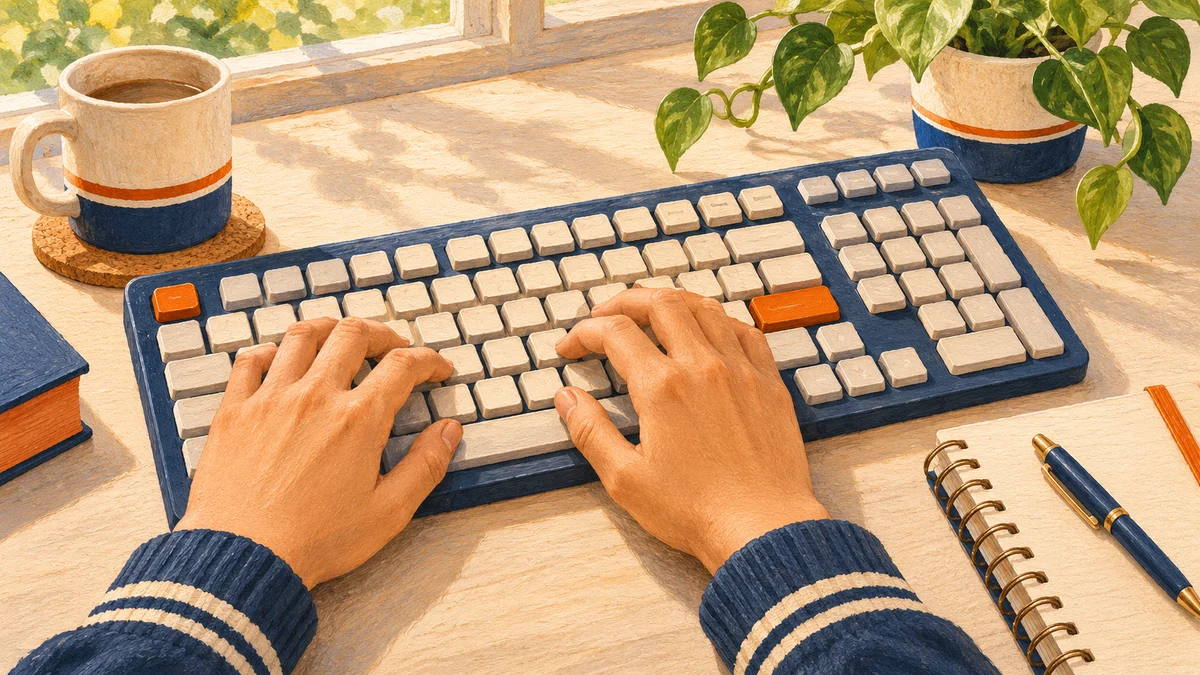
Illustrated keyboard practice workspace

Start a typing test

Home row: left hand

Place your left little, ring, middle and index fingers on A, S, D and F.

Practice A S D F →

Home row: right hand

Place your right index, middle, ring and little fingers on J, K, L and semicolon.

Practice J K L ; →

Home row combinations

Practise short combinations without looking down. Return each finger to its home key.

Practice ASDF JKL; →

Top row: left hand

Reach upward with the left fingers, then return to the home row.

Practice Q W E R T →

Top row: right hand

Reach upward with the right fingers and keep your wrists relaxed.

Practice Y U I O P →

Bottom row: left hand

Move down one row and use the correct finger for each key.

Practice Z X C V B →

Bottom row: right hand

Practise the lower right keys with small, controlled movements.

Practice N M , . / →

Common letter pairs

Repeat common pairs slowly, aiming for even spacing and accuracy.

Practice TH HE IN ER AN →

Capital letters

Use the opposite hand for Shift when typing a capital letter.

Practice Shift + letters →

Numbers row

Reach to the number row and return to the home position.

Practice 1 2 3 4 5 6 7 8 9 0 →

Punctuation

Practise punctuation marks while keeping sentence spacing consistent.

Practice .,;:!? →

Full sentences

Combine the rows in complete sentences. Focus on a relaxed, steady rhythm.

Practice Complete passages →

Common words

Practise high-frequency words until you can type them without pausing between letters.

Practice the and that with from →

Double letters

Notice repeated letters and keep the same finger movement controlled and even.

Practice ll ss ee tt pp mm →

Common endings

Practise common word endings to improve rhythm when typing longer words.

Practice ing ed tion ment →

Capitalization and punctuation

Use Shift with the opposite hand and place punctuation accurately.

Practice The quick answer is: yes! →

Dates and numbers

Practise number groups, dates, times and decimal values without looking down.

Practice 2026 11/22 9:45 125.50 →

Symbols and shortcuts

Reach for symbols carefully and return your fingers to the home row.

Practice @ # $ % & * ( ) →

Business writing

Type clear workplace sentences, names, dates and short instructions.

Practice Please review the attached report. →

Legal terminology

Practise longer terms with careful spelling and consistent spacing.

Practice agreement clause notice liability →

Healthcare terminology

Type specialist words accurately and keep a steady pace through longer terms.

Practice patient history assessment follow-up →

Code punctuation

Practise brackets, braces, quotes, semicolons and common programming symbols.

Practice const item = { ready: true }; →

Speed building

Repeat a familiar passage and increase speed gradually while maintaining accuracy.

Practice Steady rhythm beats rushed typing. →

Accuracy assessment

Complete a final skills check. Review difficult keys and repeat any lesson that needs more work.

Practice Accuracy is the foundation of useful typing. →

Build accuracy before speed

Start with a small group of keys and repeat it until you can find each key without searching. The first lessons introduce the home row. Later lessons add the upper and lower rows, numbers, punctuation and longer passages. Choose a lesson that matches your current comfort level. Repeating an easier lesson accurately is more useful than rushing through unfamiliar keys.

A short practice routine

Place your index fingers on F and J. Most physical keyboards have raised marks on those keys. Keep your shoulders relaxed and your wrists comfortable. Read a few characters ahead, then type at a steady pace. After each round, review accuracy and the keys you missed. Repeat the same lesson slowly before trying to improve your speed.

Try two short rounds, take a break, and finish with a timed passage. Compare results using the same duration and difficulty. A short familiar drill can produce a higher score than unfamiliar prose, so the two scores do not measure exactly the same task.

Make practice useful outside this page

Once letter placement feels familiar, work on capitals, punctuation and numbers. These appear in assignments, messages and everyday forms. The later lessons include workplace-style text and code-like sequences. They are practice material, not professional assessments.

Your progress and privacy

Basic lessons work without an account. Results remain in this browser and may disappear if you clear its storage. Sign in with your America.edu account before a verified test to save a checked result to your account. Public leaderboard submissions and certificates use additional verification.